







Enterprise Resource Planning (ERP) implementations are among the most transformative and risky initiatives an organization can undertake. While the promise of streamlined operations, unified data, and scalable growth is compelling, the path to realizing that promise is fraught with pitfalls. The key to navigating them is a clear-eyed understanding of the ERP implementation risks and a client mindset calibrated for change.
1. The Risk Landscape: What Can Go Wrong?
ERP implementations are complex by nature. They touch every department, disrupt long-standing processes, and demand significant time and resource investment. Based on numerous full life cycle projects, here are the most common risks:
- Scope Creep: As highlighted in both internal and external sources, scope expansion beyond initial estimates is a frequent issue. Without disciplined change control, what starts as a focused implementation can balloon into an unmanageable initiative.
- Late or Insufficient User Engagement: Delayed involvement of end users leads to poor adoption, missed requirements, and post Go-Live issues. The Dynamics 365 Implementation Guide v2 emphasizes early user readiness as a pillar of Microsoft’s “Success by Design” framework.
- Integration Complexity: ERP systems rarely operate in isolation. Integrating with legacy systems and third-party tools can introduce delays and data inconsistencies if not planned meticulously.
- Underestimating Change Management: Projects are not just technical, they’re deeply human. Resistance to change, unclear communication, and lack of training can derail even the best-designed systems.
2. The Right Client Mindset: Before the First Milestone
Before kickoff, clients must adopt a mindset that balances ambition with realism. Here’s what that looks like:
- Be Prepared to Let Go of the Past: As part of the Sikich HEADSTART methodology and template notes, starting from a blank slate often leads to overemphasis on legacy processes. Instead, focus on how the business should operate in the future.
- Embrace Standardization: Customizations can be tempting, but they often introduce risk and cost. The HEADSTART methodology used in Sikich projects encourages leveraging preconfigured systems and industry best practices.
- Invest in Governance and Communication: Clear roles, escalation paths, and decision-making frameworks must be established from day one. This includes aligning on scope, timelines, and success metrics, as seen in the kickoff structure outlined in SIK Kickoff Slides including HEADSTART.
- Prioritize Change Management: Organizational Change Management (OCM) isn’t a side activity, it’s central to success. From kickoff communications to role-based training, OCM must be embedded throughout the project lifecycle.
3. Final Thoughts: Risk Is Inevitable, Failure Is Not
ERP implementations will always carry risk. But with the right mindset, proactive planning, and a commitment to transparency and collaboration, those risks can be managed and even turned into opportunities for growth.
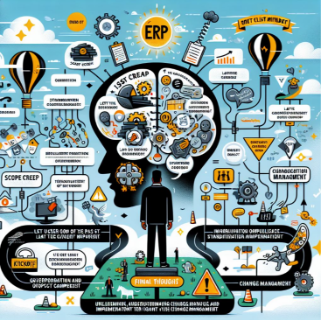
As you prepare for your ERP journey, remember success isn’t just about the software. It’s about the people, the process, and the perspective you bring to the table. If you’re ready to start your ERP implementation journey with as few risks as possible, reach out to our experts.
This publication contains general information only and Sikich is not, by means of this publication, rendering accounting, business, financial, investment, legal, tax, or any other professional advice or services. This publication is not a substitute for such professional advice or services, nor should you use it as a basis for any decision, action or omission that may affect you or your business. Before making any decision, taking any action or omitting an action that may affect you or your business, you should consult a qualified professional advisor. In addition, this publication may contain certain content generated by an artificial intelligence (AI) language model. You acknowledge that Sikich shall not be responsible for any loss sustained by you or any person who relies on this publication.